

We continue to see more public companies turning to new media and social channels to reach their audiences, develop their own content, and get intentional about how their message is delivered. That need for trusted, social-native spaces to tell a companies story will only increase as competition for attention increases.
Marketopolis and After Earnings (with Morning Brew) sit inside that shift, and this past season brought some standout conversations. On Marketopolis, highlights included Jonathan Neman of Sweetgreen ($SG), Yoni Assia of eToro, David Barry of Pursuit ($PRSU), Peter Colis of Ethos Technologies ($LIFE), and David Gandler of Fubo ($FUBO). On After Earnings, the show we produce with Morning Brew, hosted by Ann Berry, recent guests have included Match Group CFO Steven Bailey ($MTCH), Twilio CEO Khozema Shipchandler ($TWLO), Booking Holdings CEO Glenn Fogel ($BKNG), Snowflake CEO Sridhar Ramaswamy ($SNOW), and Coursera CEO Greg Hart ($COUR).
The two shows work opposite ends of the same problem. An earnings call covers what happened last quarter. A filing establishes the facts. Neither leaves much room for how a leader thinks: why management picked one path over another, what the market gets wrong about the business, what to watch before a strategy shows up in the numbers. Marketopolis takes up those questions outside the reporting cycle. After Earnings starts with the quarter a company just reported and lets its CEO or CFO explain it.
One theme ran through these conversations. Public-company communication is moving from periodic disclosure toward continuous explanation. Not podcasts instead of filings, but explanation built around them, in the places investors already spend their time.
On Marketopolis
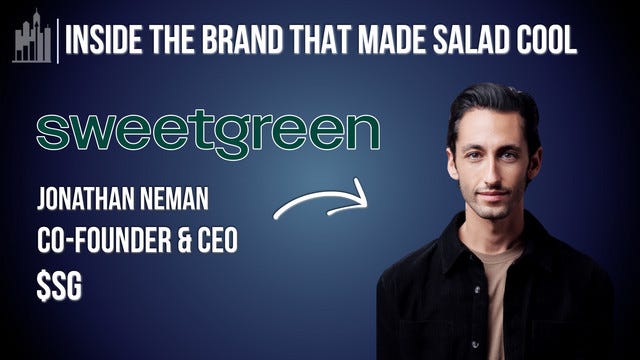
Sweetgreen ($SG) — Jonathan Neman, Co-Founder and CEO
Neman tied a long list of initiatives, from new menu items to Infinite Kitchen automation to bigger brand bets, back to one thesis: a better and more consistent customer experience, more occasions to visit, stronger restaurant economics. Launching wraps meant designing a custom tortilla rather than bending ingredient standards. He was equally candid about the limits of optimization. Consumer brands need art along with science, and over-optimizing kills the unmeasurable bets that made the brand matter in the first place.
The Comms / IR lesson: a transformation communicated as a list of projects gets judged one announcement at a time.
Listen → Sweetgreen’s ($SG) Big Bet: Wraps, Robots & a Generational Brand
eToro — Yoni Assia, Co-Founder and CEO
Assia has spent nearly twenty years opening capital markets to more people, and eToro runs its own investor relations the same way. Earnings go out on YouTube, X and LinkedIn, with questions taken from analysts and individual shareholders alike. His argument: results show what you’ve achieved, but investors also need to see where the next five years of growth come from. When your customers can become your shareholders, distribution is investor strategy.
Listen → eToro Co-Founder & CEO Yoni Assia: The IPO Story, the AI Rebuild, and the Future of Retail Investing
Pursuit ($PRSU) — David Barry, President and CEO
Barry has to explain why 17 destinations across four countries belong in one company. His answer is a capital-allocation model: find places that can’t be reproduced, then build lodging, dining and transportation around them to deepen each destination’s economics. Since separating from its former parent, Pursuit can tell that story without spending half of every investor meeting on the conglomerate that used to sit on top of it. Vision 2030 gives investors the long view instead of asking them to assemble it quarter by quarter.
Listen → Pursuit ($PRSU) CEO David Barry: From Ski Instructor to Public Company CEO
Ethos Technologies ($LIFE) — Peter Colis, Co-Founder and CEO
No existing label quite fits Ethos, so Colis built his own: a three-sided platform serving policyholders, agents and carriers, with more than 600,000 policies issued and over 15,000 agents selling its products. He was frank about share-price noise since going public, and his response is to keep pointing at the size of the market and the room to compound. Define your company before the market defines it wrong.
Listen → Inside Ethos ($LIFE): How Peter Colis Rebuilt Life Insurance From 10 Weeks to 10 Minutes
Fubo ($FUBO) — David Gandler, Co-Founder and CEO
Gandler talked about what going public actually changes: governance, shareholder time horizons, founder control, and now a business combination with Hulu + Live TV under Disney’s majority ownership. Fubo, he said, has become a “show me” rather than a “tell me” story. That honesty is the useful part. Explanation gives investors context, but it can’t substitute for results.
Listen → FuboTV Co-Founder & CEO David Gandler: The Reality of Becoming a Public Company CEO
The season also included conversations with the leadership of Vince, and these build on earlier Marketopolis episodes with Celsius’s John Fieldly, Nextdoor’s Nirav Tolia and CleanSpark’s Matt Schultz.
On After Earnings
After Earnings starts inside the reporting cycle. Ann Berry sits down with CEOs and CFOs around their results; the archive is at afterearnings.com and on YouTube.
Match Group ($MTCH) — Steven Bailey, CFO
Bailey walked through Tinder’s rebrand and the launch of Tinder Events, how Match splits investment between Tinder and Hinge, and the shared-services savings funding the turnaround. Fix the user experience first, he argued, even at a near-term revenue cost, because payers and free cash flow follow a product people want to use. A CFO who can connect brand spend to cost discipline tells investors whether a turnaround is a plan or a hope.
Listen → Match Group CFO Steven Bailey on Tinder’s turnaround strategy, IRL events and winning over Gen Z
Twilio ($TWLO) — Khozema Shipchandler, CEO
The question hanging over Twilio is commoditization. Shipchandler answered with specifics: the customer data platform that personalizes interactions (his example was mortgage shopping), pricing power from owning more of the customer relationship, and the work on branded calling and spam prevention that could restore some trust in the US phone network.
Booking Holdings ($BKNG) — Glenn Fogel, CEO
Fogel has Pursuit’s problem at global scale: why do these brands belong together? His answer is the Connected Trip, one journey assembled across the portfolio. He also took on the competition in alternative accommodations and explained where AI products like Priceline’s Penny fit the strategy.
Listen → Booking Holdings CEO on Travel, Brand Distinction and Connected Trips
Snowflake ($SNOW) — Sridhar Ramaswamy, CEO
Ramaswamy discussed AI risk on the record, not just the wins: what it means to put large language models near customer data, alongside Snowflake’s AI agents for enterprise workflows, its partnerships with OpenAI, Anthropic and Google Cloud, and the path to GAAP profitability. With every software company claiming an AI strategy, candor about what could go wrong reads as credibility.
Listen → Snowflake CEO on AI Risk, Product Innovation and Winning Enterprise Customers
Coursera ($COUR) — Greg Hart, CEO
Hart had a merger to explain. Coursera’s business skews consumer, Udemy’s skews enterprise, and the combination lands near an even split. He put numbers behind the story, including roughly 197 million registered learners, and addressed the awkward part head on: the sector’s stocks have lagged even as fundamentals improved. Deal terms live in the press release. The logic has to come from the CEO.
Listen → Coursera CEO Greg Hart on the Udemy Deal, the Skills Economy and the Future of Online Education
What kept surfacing
Category labels limit companies. “Salad chain,” “commodity infrastructure,” “a bunch of travel sites” — executives on both shows spend real energy replacing labels like these, because the label decides which competitors, economics and risks investors apply to the business.
The most useful moments came when a leader exposed a trade-off: why Sweetgreen won’t cut ingredient standards, why Match Group holds back on monetization, how Pursuit decides what deserves capital. A release announces the decision. A conversation explains the alternatives, and that context is what lets investors judge the next decision before the numbers arrive.
And direct communication has gone mainstream. When the sitting CEOs of Booking Holdings and Snowflake give long-form interviews around their results, the practice has stopped being experimental. Done well, it takes a clear point of view and the discipline to stay within disclosure controls. It doesn’t require chasing virality.
Join the conversation
We’re inviting public-company executives onto both shows. The best episodes start with a real strategic question: what the market misunderstands, how capital gets allocated, what a turnaround taught you. The goal is never to repeat the earnings script. It’s to give leaders room to explain the thesis and the decisions behind it.
About Stakeholder Labs: We work with companies on investor engagement, financial communications, and shareholder intelligence.
We produce shows under Farsight Group, like Marketopolis, and After Earnings (with Morning Brew). Please submit guests at the link below or emailing bookings [at] farsight-group.com directly.*
https://form.typeform.com/to/FktLQOpc
*Marketopolis interviews exclusively public company CEOs and After Earnings hosts predominately public company CEOs and CFOs (with limited exceptions).
Excellent innovative and forward looking content.